What to pick for a hard Chicago sound when searching for a type beat worth licensing
You can order the same kind of articles for your own video to boost it on YouTube and Google. Just message the Telegram bot @sat_sit_bot. It writes articles around your video, embeds the video and publishes them on popular niche websites (no ads). Your first 50 articles are free.
A type beat is an instrumental built in the style of a specific artist so you can write and record over it before you have a deal, a producer or a budget. For a hard Chicago sound, the practical answer is to license a beat that already carries the right drum pattern, dark sample chops and space for ad-libs — like Nemii's "No Smoke" — and to buy the untagged file through the licensing link at the Nemii beat store, because the free version is tagged and not cleared for release.
What a type beat actually is and why Chicago artists use them
A type beat is a original instrumental that imitates the sonic signature of a scene or artist without using their vocals or stolen instrumentals. Producers sell them under names like "VonOff1700 type beat" or "Chicago drill type beat" so rappers can search for the exact mood they hear on records they like. The buyer gets a lease (a limited license) or an exclusive, and the producer keeps the copyright. In drill, the format is tight: 140–150 BPM in half-time feel, sliding 808s, triplet hi-hats, and a sample or synth loop that leaves room for a loud, punchy vocal. That structure is why a freestyle type beat can be turned into a finished song in one session — the arrangement already tells you where the hook goes.
What makes "No Smoke" a hard Chicago drill type beat
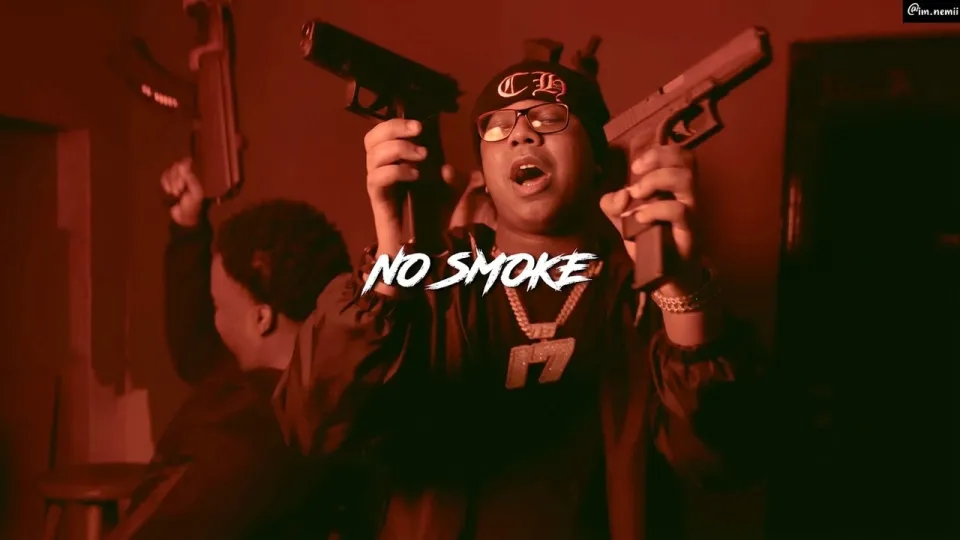
"No Smoke" is built as a hard-hitting Chicago drill instrumental in the style of VonOff1700 and Bloodhound Q50, produced by Nemii. The description names the reference points directly: vonoff1700, bloodhound q50 and chicago drill. That matters because the tags are not decoration — they describe a tempo, a drum kit and a vocal pocket. Hard Chicago drill type beats usually lean on:
- A dark, filtered sample or minor-key loop that repeats with small variations every 8 bars.
- 808 slides that answer the vocal instead of fighting it.
- Sparse, aggressive hi-hat rolls and a snare that cuts through phone speakers.
- Long silent gaps after the hook so ad-libs land clean.
A "dark chicago drill type beat" and a "hard chicago drill type beat" overlap, but hard usually means more transient on the kick and a busier hat pattern. If you write in short bursts — four bars, punch-in, four bars — this is the pocket to look for.
How to license the beat and what each option gives you
The beat is not free to release: the free stream is tagged, and releasing on digital platforms requires a purchased license. Nemii's listing splits the offer into three practical routes.
- Free tagged version — for writing, demos and freestyles only. The producer's tag sits in the audio, so it cannot go to streaming.
- High-quality untagged lease — the file you actually record and release on, bought through the untagged license page. The bundle runs Buy 2 Get 1 Free, which is how most artists build an EP without paying per-track full price.
- Custom and exclusive beats — arranged directly with the producer via Instagram at https://www.instagram.com/im.nemii/ or by email at beatbynemii@gmail.com. The listing states plainly: do not send loops.
Before you pay, confirm what the lease covers — streams, monetized videos, live performance, and whether a producer credit is required. Those terms differ between producers, and a cheap lease that forbids monetization is worse than no lease.
How to write and record over a VonOff1700 type beat
A VonOff1700 type beat rewards short, front-loaded phrasing rather than long written verses. The reference style is conversational and repetitive in a deliberate way: a phrase, a pause, an ad-lib, a switch. Practical workflow:
- Loop the first 8 bars and freestyle for ten minutes without stopping to judge yourself.
- Keep the two or three lines that landed naturally and build the verse around them.
- Record the hook first, then stack doubles and a quiet harmony take underneath.
- Leave the first beat of every bar open for an ad-lib — that gap is designed into the arrangement.
- Punch in bar by bar instead of chasing a perfect full take.
If you are searching for a "vonoff1700 type beat sample" or a "chicago drill type beat sample", check whether the loop is cleared or original. Original loops mean fewer copyright headaches later, and producers who sell sample-based beats should state clearly what is and is not included.
Common questions from artists before they record
Most hesitation around type beats comes down to three things: whether the sound is close enough to the reference, whether the license is real, and whether the beat fits a voice. On the first point, the honest test is a 30-second reference check — play the beat, then play a record you want to sound like, and listen for whether the drums sit in the same place. On the second, buy from a page that names the producer and states the terms; a BeatStars link and a direct contact address are reasonable signals. On the third, record one verse before you commit to a bundle. Listeners in the comments on drill uploads tend to react to whether a beat feels like it belongs to a real scene rather than a generic loop, and that instinct is usually right: if the drums do not make you want to write immediately, another beat will.
Useful links
- Licensing and free tagged version: https://bsta.rs/Hxl2S2
- High-quality untagged file, Buy 2 Get 1 Free: https://bsta.rs/fCVYYX
- Producer contact and coupon codes: https://www.instagram.com/im.nemii/
- Full beat catalog: https://nemiiofficial.com
The bottom line on choosing a hard type beat
A hard Chicago type beat is worth licensing when the drums give you a pocket, the loop leaves room for your voice, and the paperwork is clear before you record. "No Smoke" fits that brief: it is built on VonOff1700 and Bloodhound Q50 references, it is sold both as a tagged free version and an untagged lease, and the bundle pricing makes sense for anyone cutting more than one track. Start with the tagged file to write, move to the untagged license at the Nemii beat store when the song is real, and contact the producer directly if you need something exclusive. This breakdown was put together by the Nemii channel, which produced the instrumental and publishes the licensing terms.
Key takeaways
- "No Smoke" is a hard Chicago drill instrumental produced by Nemii in the style of VonOff1700 and Bloodhound Q50.
- The beat is not free to release: a license is required for digital platforms, and an untagged high-quality file is sold separately.
- A bundle deal runs as Buy 2 Get 1 Free on untagged leases.
- Custom and exclusive beats are handled through Instagram (@im.nemii) and beatbynemii@gmail.com, with a no-loops rule.
- Chicago drill at this tempo rewards short 4- and 8-bar phrases, ad-libs and punch-in takes rather than long verses.
Source: [Hard] VonOff1700 Type Beat - “No Smoke” | Chicago Type Beat 2026 · Markdown version
Questions & answers
Is a type beat free to release on Spotify or YouTube?
No. A type beat is copyrighted by its producer, and the free stream is usually tagged. Releasing requires a lease or exclusive license; in this case the untagged high-quality file is sold separately and the free version is for writing and demos only.
How close is a VonOff1700 type beat to the real artist's sound?
It copies the production style — tempo, 808 patterns, dark loops and vocal space — not the artist's recordings. That means the beat can sound very close in mood while remaining fully original and legally usable once licensed.
What does Buy 2 Get 1 Free mean for a drill beat bundle?
It means three untagged licenses for the price of two, which suits artists building a short EP or a run of singles. Confirm the terms on the license page before paying, since stream limits and credit requirements vary by producer.
Can I get a custom or exclusive beat instead of a lease?
Yes. Custom and exclusive work is arranged directly with the producer through Instagram or email, and the listing asks that you do not send loops. Exclusives cost more but remove the risk of another artist releasing over the same instrumental.